If you are considering an equestrian or multi‑acre estate in Milton, you already know it is more than a home purchase. It is a lifestyle and an operation to run well. The right property supports your horses, protects your time, and preserves long‑term value. In this guide, you will learn exactly what to evaluate in Milton so you can move forward with confidence. Let’s dive in.
Why Milton stands out for horses
Milton is one of North Atlanta’s most horse‑forward cities. The City actively highlights its riding culture, horse farms, and facilities on its equestrian community page. That culture is backed by clear zoning and permitting through Community Development, which you can review on the City’s zoning and UDC resources.
Local policymaking has addressed equestrian topics, from fence treatments to barn setbacks, which often means direct coordination with City staff or the BZA for barn and arena placement. See this overview of Milton’s equestrian‑friendly approach in the Atlanta Journal‑Constitution. Milton also signals animal‑safety priorities in its ordinances and city initiatives, a helpful lens as you evaluate site risks and neighbor activities.
Barn and arena essentials
Barns: function, safety, and insurance
A well‑designed barn protects your horses, lowers risk, and reduces operating cost.
- Condition: inspect roof, framing, door hardware, and drainage away from foundations. Note any insect or rot damage.
- Layout: look for secure tack storage, dry and rodent‑resistant feed and hay storage, and a separate wash or solarium area.
- Ventilation and electrical: confirm safe, code‑compliant wiring and healthy airflow. Poor ventilation can trigger respiratory issues; poor wiring raises fire risk.
- Manure handling: confirm a designated storage or composting site with equipment access. For multi‑horse operations, a written plan is best practice. See this manure management overview for what a solid plan includes.
Local step: request the seller’s permit history and any variances, and verify records with Milton Community Development’s zoning and permits page.
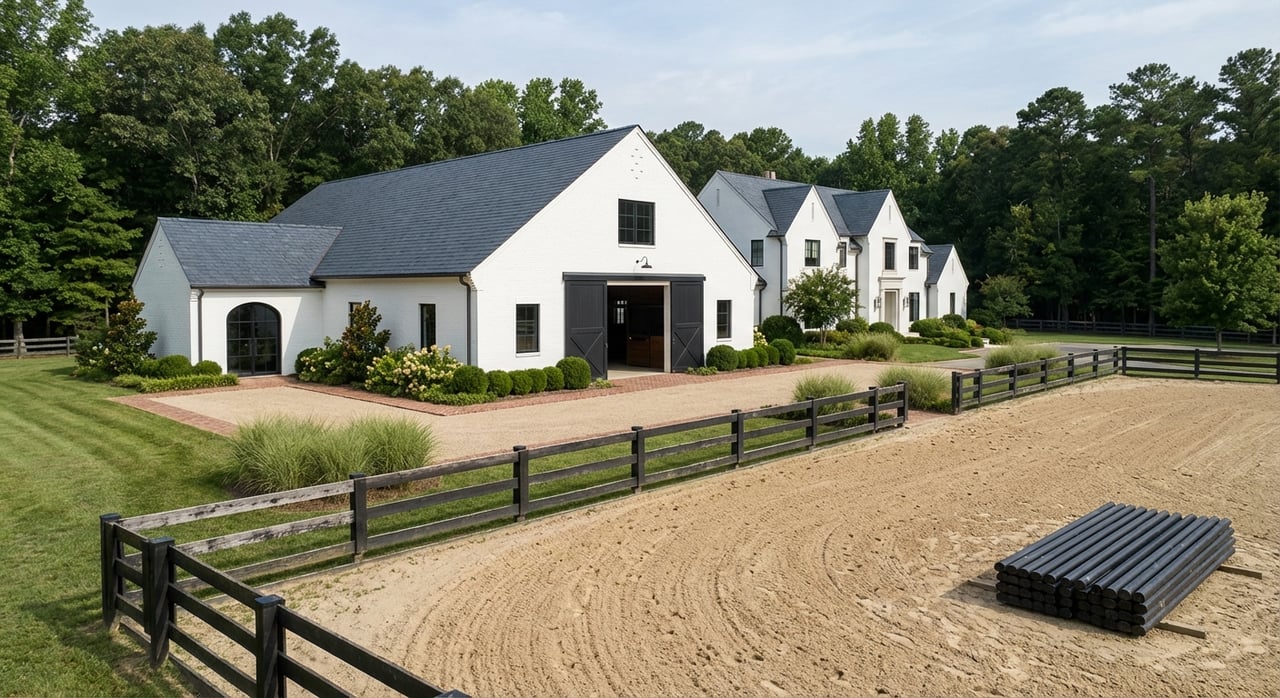
Arenas: siting and safe footing
Arena design drives horse soundness and the number of usable days each year.
- Footing and base: ask for details on the layered base, dust control, watering, and maintenance logs.
- Drainage: arenas need slope and engineered drainage. Low ground or poor crowns lead to ruts and costly rework.
- Clearances and noise: for indoor arenas, verify ceiling height and lighting. Consider distance to the house for evening use.
- Discipline fit: if you compete, confirm size. For example, dressage rings are commonly 20×40 meters or 20×60 meters, which affects siting and usability. See this dressage ring reference.
Local step: request arena construction permits, the builder’s name, and any engineered specs.
Land, pasture, and soils
Pasture condition and soils determine long‑term carrying capacity and cost.
- Pasture health: walk turnout areas for overgrazing, manure build‑up near gates and waterers, and bare or muddy sections that will require rehab.
- Wet areas: flag zones that hold water after storms. Permanent wet spots limit usable acreage and can affect arena or septic siting.
- Soil data: ask for recent soil tests or hay yields. Run a parcel review using the USDA NRCS Web Soil Survey. For a how‑to and best practices, use this UF/IFAS guide.
Fencing and paddock layout
Fencing is a safety system and a major maintenance line item.
- Fence type and condition: review post spacing, straightness, top‑rail integrity, fasteners, and visibility for horses. Match type to use, such as perimeter, cross‑fencing, or a foaling paddock.
- Gates and access: confirm safe, wide gates and easy tractor or trailer access.
- Local rules: Milton has clarified equestrian fence regulations, including certain material and view shed considerations in rural areas. Review this local summary of Milton fence rules and confirm any Design Review Board requirements with the City.
Utilities, septic, and access
Many acreage estates rely on private systems. Capacity and records matter.
- Sewer vs. septic: if on septic, request soil reports and percolation tests, past permits, and the system’s bedroom capacity.
- Wells: verify well depth, yield in gallons per minute, and water quality lab results.
- Power: confirm electric service and whether three‑phase is needed for barn equipment or arena lighting.
- Road and drives: check frontage, any shared easements, and maintenance agreements.
Local step: contact Fulton County Environmental Health for well and septic records, permits, and inspections through the North Fulton office.
Environmental limits and buffers
Floodplains, wetlands, and stream buffers limit where you can place barns, arenas, or manure storage.
- Map the site: check FEMA flood zones and scan for seasonal seeps or water features during a walk‑through.
- Wetlands: if wetlands are suspected, hire a licensed delineator to confirm boundaries.
- Runoff: site animal facilities so runoff does not reach streams or wells. For practical steps, see the UF/IFAS property due diligence guide.
Operations that protect value
Daily practices influence neighbor relations, horse health, and resale.
- Manure plan: stall barns produce high volumes that need planned collection, storage, and disposal or composting. Review this manure management guide to benchmark best practices.
- Stocking and rotation: use conservative stocking rates and rotational grazing to reduce mud and extend pasture life. University extension resources, like Rutgers guidance on rotational grazing, provide practical checklists.
- Budgeting: reserve for routine fence repairs, pasture reseeding, and seasonal hay even on productive parcels.
Market and resale in Milton
Milton is a premium northern Atlanta acreage market, with typical home values well above the regional median. That backdrop supports premium pricing for well‑located, well‑improved equestrian properties. At the same time, horse properties are a niche segment that benefit from specialized marketing and clear documentation.
Resale drivers include documented, code‑compliant barns and arenas, engineered drainage, reliable utilities with records, and recorded access easements. Unknown septic history, non‑permitted work, or unstable wet pastures are common detractors. Keep future flexibility in mind by preserving buildable envelopes shown on recorded plats.
Smart purchase checklist
Pre‑offer and inspections
- Confirm zoning, permitted uses, setbacks, and whether barns or arenas were permitted or received variances. Ask for a zoning certification letter via Milton Community Development’s zoning resources.
- Order a certified boundary survey and compare it to recorded plats and easements.
- Run a Web Soil Survey and request any seller soil tests. For steps and cautions, use this UF/IFAS guide.
- If septic is likely, have a licensed designer review historic permits and capacity, and contact Fulton County Environmental Health for records through the North Fulton office.
- Have an equine‑savvy contractor inspect the barn structure, electrical, ventilation, and fire risk; ask your vet to review wash stalls, ventilation, and biosecurity layout.
- For arenas, request builder specs and a civil or engineer review of the base and drainage.
- Walk pastures and paddocks for standing water, slopes, high‑traffic mud, and fence and gate condition.
- Confirm manure handling: storage location, setbacks from wells and water, and whether a formal plan exists. See the manure management overview for siting tips.
Contract to closing
- Order title review for access and utility easements that could affect future barn or arena placement.
- Verify whether the land is enrolled in Georgia’s Conservation Use program and understand 10‑year covenant rules and rollback penalties through the state CUVA rules.
- Confirm electric capacity and any planned public projects that may change access or road conditions.
- Get written confirmation for all seller‑disclosed permits. If any work lacks permits, obtain estimates to bring structures into compliance.
Local resources
- City of Milton Community Development and Zoning: permits, plats, and variances. Start with the zoning resources.
- Milton Equestrian Committee: contacts and local facility context. Review the committee page.
- Fulton County Environmental Health, North Fulton: well and septic records and permitting.
- UF/IFAS property due diligence guide: soils, septic, and environmental red flags. Read the guide.
- Georgia CUVA program: state rules for current‑use tax assessment.
- City equestrian overview: culture and facility context on the equestrian community page.
A well‑chosen Milton estate should balance horse care, daily efficiency, and long‑term value. With a clear due diligence plan, you can secure the right acreage and be ready to refine it for your goals. If you would like a curated search and a disciplined plan to vet barns, arenas, utilities, and permits, connect with Tasha Kline for tailored guidance.
FAQs
What should I verify with the City of Milton before offering on a horse property?
- Confirm zoning and permitted uses, barn and arena setbacks, and whether existing equestrian structures were permitted or required variances through Community Development’s zoning resources.
How do Milton’s fence rules affect my paddock plan?
- Milton has clarified fence regulations that can guide materials and placement in rural areas; review local summaries and confirm any Design Review Board requirements with the City before building or replacing fences.
What arena details matter most for soundness and resale?
- Ask for engineered base and drainage specs, footing type and maintenance logs, and, for indoor arenas, ceiling clearance and lighting; match dimensions to your discipline needs.
How can I assess soils and pasture capacity on a Milton acreage parcel?
- Walk fields for wet zones and overgrazing, request soil tests, and run a USDA Web Soil Survey; use extension guides to set stocking rates and pasture improvement steps.
Who manages well and septic permitting and records for Milton properties?
- Fulton County Environmental Health’s North Fulton office maintains well and septic permits and records; contact them early to confirm capacity and any upgrade needs.
What is Georgia’s CUVA program and why might it matter to me?
- CUVA offers a preferential current‑use tax assessment for qualifying agricultural land under a 10‑year covenant with rules and potential rollback penalties if the use changes; review the state rules during due diligence.