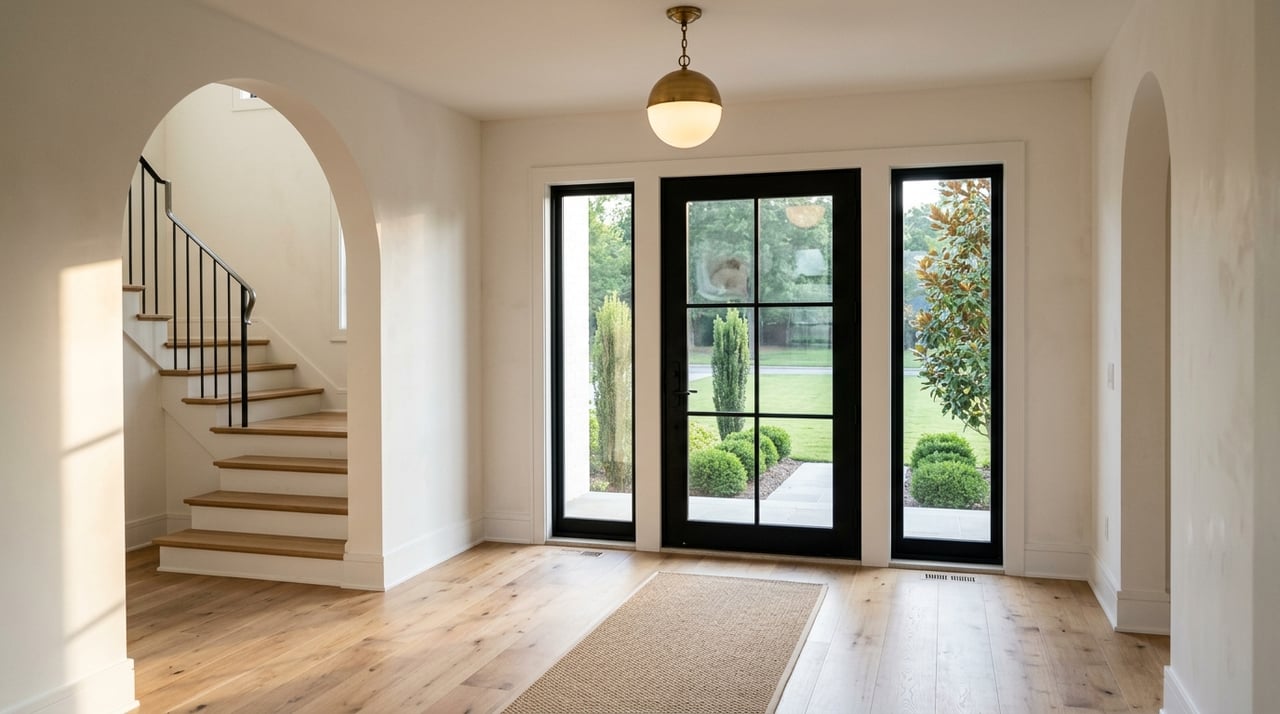
Woodstock New Construction Investment: What Matters Most
July 2, 2026
July 2, 2026
If you are looking at new construction in Woodstock, it helps to think beyond glossy finishes and model-home staging. A new home can be a lifestyle upgrade, but it can also be a long-term asset if you evaluate it with the right lens. When you know what supports resale, durability, and future buyer appeal, you can make a more confident decision. Let’s dive in.
Woodstock has shown meaningful growth, which is one reason buyers continue to watch its new construction communities closely. The city’s population reached an estimated 39,895 in July 2025, up from 35,065 in the 2020 Census, which reflects 13.7% growth.
The broader county story matters too. Cherokee County grew from 266,620 in 2020 to 293,513 in 2024, outpacing Georgia’s 4.4% growth over the same period. That kind of expansion can support housing demand, but it also comes with more supply, which is why you should evaluate each community carefully rather than assume all new construction will perform the same.
Cherokee County recorded 2,665 building permits in 2024. For you as a buyer, that means there is an active pipeline of homes that could become future competition when it is time to sell.
Woodstock’s median household income is $103,496, and the median value of owner-occupied homes is $436,500. Cherokee County’s median owner-occupied home value is close at $435,100, while the county owner-occupied rate is 77.3%.
Those numbers suggest an important point. Broad city-versus-county comparisons only tell part of the story. In Woodstock, long-term value is often shaped more by the specific community, builder, layout, and location than by the ZIP code label alone.
If you want to evaluate a new construction community as a long-term asset, start with the builder. A polished sales center can create a strong first impression, but long-range value usually depends on how well homes perform after closing.
A practical way to screen a builder is to look for three things:
This matters because your future resale is tied to more than curb appeal on day one. It is also tied to reputation, service, and how the broader community holds up over time.
For newly built homes, the Federal Trade Commission says warranties generally cover workmanship and materials for the first year, HVAC, plumbing, and electrical systems for two years, and major structural defects for up to 10 years. Many warranties also outline written claim procedures and may require mediation or arbitration.
That makes warranty clarity part of your due diligence. You do not just want to hear that a builder offers coverage. You want to understand what is covered, for how long, and how claims are handled.
Some large builders publish this information clearly. Pulte advertises a 10-year limited home warranty, and David Weekley publishes a three-level program with one-year workmanship coverage, two-year mechanical systems coverage, and 10-year structural coverage. In practical terms, communities backed by transparent warranty structures may offer a stronger long-term ownership experience than those with vague or hard-to-verify terms.
New construction pricing can be misleading if you only focus on the list price. NAR reported in 2025 and 2026 that builder incentives, including price cuts and mortgage-rate buydowns, have narrowed the gap between new and resale homes in many markets.
For you, that means the real comparison is net purchase cost plus expected holding costs. A higher-priced new home may become more competitive if the builder offers meaningful concessions, lower near-term maintenance, or better utility efficiency.
When you compare communities, ask for a full picture that includes:
Some community features are more durable than others. In Woodstock, the city’s GIS and planning framework point to long-term value drivers that go beyond splashy marketing language.
Woodstock’s Greenprints Trail System has continued to evolve, with updates approved as recently as August 26, 2024. The city’s administrative-area map also includes a Downtown District and an Entertainment District, while the zoning code states that the Downtown District is intended to foster a pedestrian-oriented environment. The code also says strip development is discouraged in general commercial districts.
The Ridgewalk Planning District includes form-based-code districts such as New Community Village and New Community Town Center. For buyers, this suggests that walkability, connected land use, and access to established civic infrastructure may carry more lasting value than temporary lifestyle branding.
A clubhouse rendering is not the same as a completed amenity. If part of a community’s value depends on trails, gathering spaces, or connectivity, it is smart to confirm whether those features are already delivered, funded, or still proposed.
That question matters in Woodstock because the city’s trail mapping distinguishes among completed, funded, and proposed segments. From a long-term asset perspective, completed access and proven usability usually deserve more weight than future-phase promises.
A home with real trail access or stronger downtown connectivity may appeal to a wider buyer pool later on. A home whose premium depends mainly on amenities that may change, shrink, or arrive slowly carries more uncertainty.
A flexible floor plan can protect value over a longer ownership period. NAR notes that new homes often offer open space, flex rooms, larger windows, lower near-term maintenance, lower utility costs, and more personalization than existing homes.
In Woodstock, one of the strongest long-horizon features is adaptability. A home that can support changing needs without a major remodel may remain appealing to more buyers over time.
Look closely at whether a floor plan offers:
These are not just lifestyle features. They can also support broader resale appeal because they make the home useful across more life stages.
Even in a market where buyers value space, daily convenience still matters. Woodstock’s mean travel time to work is 29.9 minutes, and Cherokee County’s is 31.3 minutes.
That does support the area’s appeal for buyers who want suburban living without an extreme commute burden. Still, not every location inside Woodstock performs the same. A community that saves five minutes in daily travel may feel materially different from one that adds ten.
When you evaluate new construction, think about access in practical terms. Consider how easy it is to reach the places you use most often and whether the location supports convenience that future buyers are likely to value too.
Cherokee County School District says it serves about 40,000 students across 40 schools and centers. It reported a 91.8% four-year graduation rate for the Class of 2025, above Georgia’s 87.2%.
At the same time, the district’s maps page says school boundaries and feeder patterns can change annually when growth requires revisions. That means you should confirm current assignment for any Woodstock new construction community rather than assume the school zone will remain fixed over your full ownership period.
This is less about prediction and more about discipline. A buyer who verifies current boundaries is making a more informed decision than one who relies on sales-center assumptions.
If you want to judge whether a Woodstock new construction community may behave like a long-term asset, use a simple framework. Focus on the elements that are most likely to influence durability, marketability, and future demand.
Prioritize communities that combine:
Use added caution with communities that rely heavily on:
In Woodstock, new construction can offer real upside, especially when you approach it with the same care you would apply to any meaningful asset decision. The strongest communities are often the ones where builder credibility, community planning, finished amenities, and flexible design all work together.
That is where strategic guidance can make a difference. If you want a tailored perspective on how a specific Woodstock new construction community may align with your long-term goals, you can start with a conversation and a clear evaluation framework through Tasha Kline.
Stay up to date on the latest real estate trends.





Discover the finest homes North Atlanta has to offer. Stay connected to exclusive listings, market insights, and opportunities curated by a luxury real estate advisor with expertise in North Atlanta’s market.